500+
Selected project
SensiBELL: IoT Anomaly Detection & Risk Monitoring
SensiBELL brought analytics into an edge environment where delayed or weak signals could carry real-world safety costs. The design required threshold logic, reliable cloud integration and fast response behavior.
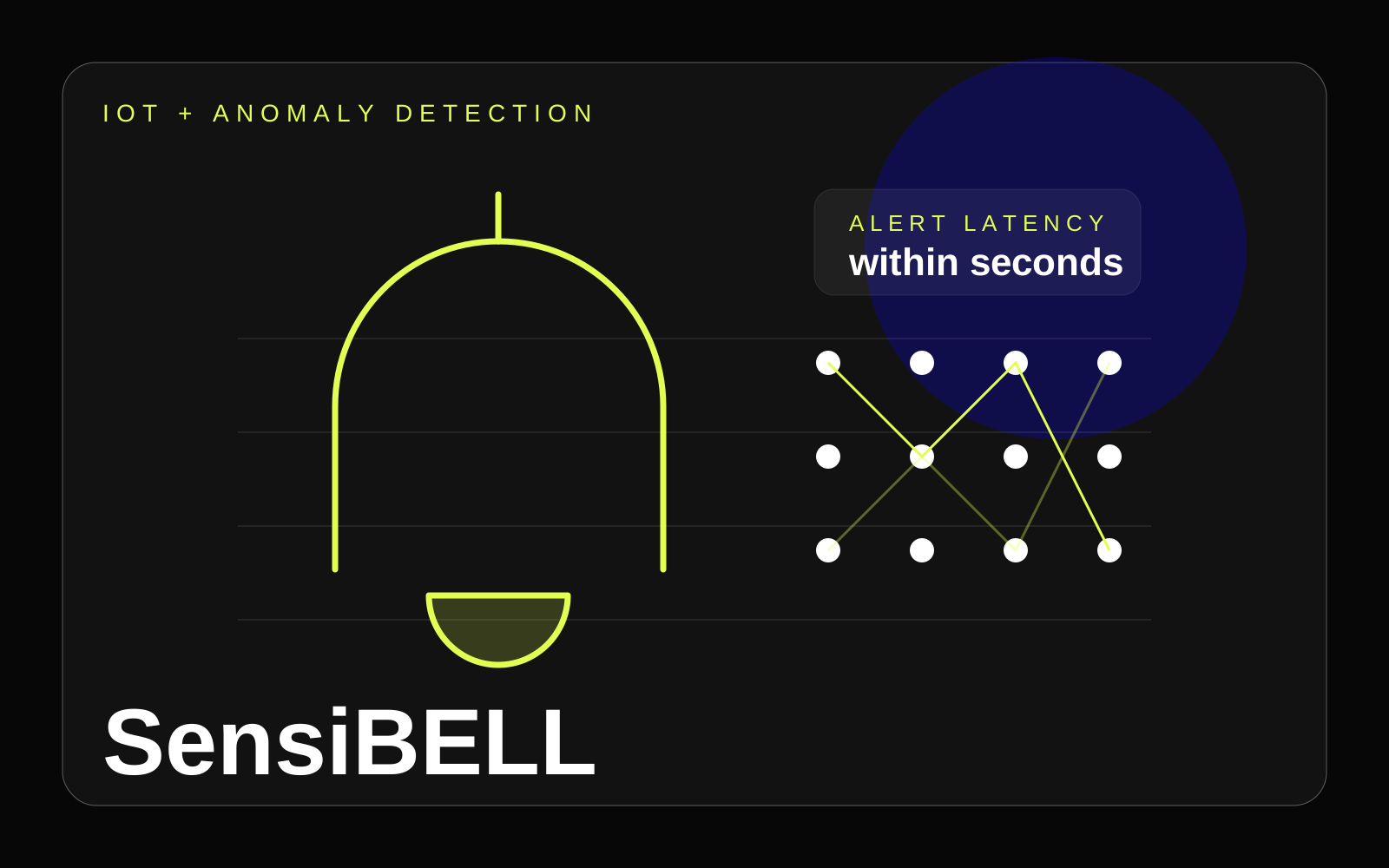
Seconds
45%
Overview
A real-time anomaly detection and alerting system built for safety-critical monitoring in rural households.
The work had to operate reliably in a real-time monitoring context, where false negatives and response delays could undermine the value of the system. Robust thresholding and reliable automation were essential.
01
Defined statistical thresholds that could flag meaningful anomalies without over-triggering noisy signals.
02
Integrated cloud-enabled pipelines with Azure IoT to ensure monitoring logic and automated control could respond quickly.
03
Tested edge conditions to understand how the system behaved when signals became irregular or operational assumptions were stressed.
04
Connected the detection layer to fast multi-channel alerting so action could happen within seconds.
01
Built a monitoring pipeline that paired anomaly awareness with real-time response behavior.
02
Reduced accident risk by 45% through rapid detection and alert routing.
03
Showed strength in combining data logic, cloud integration and physical-system awareness.
Detailed notes
What the work demonstrates.
Risk-aware design
Unlike a dashboard-only analytics problem, SensiBELL required direct consequences to be considered in the logic. Threshold setting and response speed were part of the product, not add-ons.
Edge-case thinking
The system was validated under edge conditions to understand robustness and prevent brittle automation behavior.
Cloud + hardware bridge
Azure IoT pipelines linked monitoring logic to operational action, making the system responsive rather than purely observational.
Measured outcome
Delivering alerts within seconds and achieving a 45% accident-risk reduction highlighted the practical impact of the system design.